
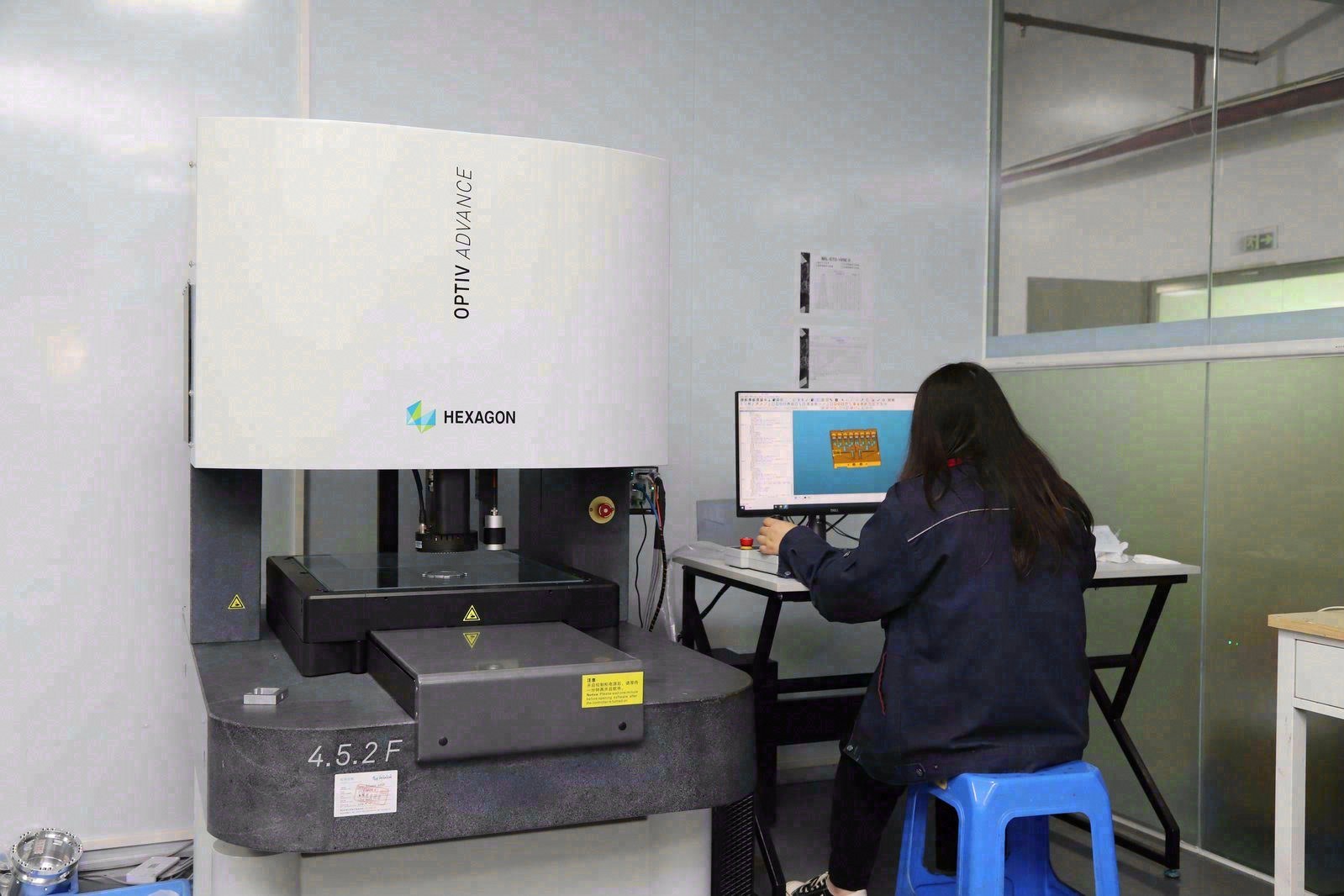
A medical part's documentation is only as trustworthy as the process that produced it. A certificate can be genuine and still describe the wrong heat if material handling is careless; a first article can be perfect and still prove nothing about the run if the machine was changed afterwards; a cleanliness record can be complete and still contradict what the floor actually did. Buyers of medical machining therefore review two things at once: the documents in the file and the process controls that make those documents true.
What does a medical-ready process actually mean on a machining floor?
On a machining floor, "medical-ready" rarely means exotic equipment or a separate cleanroom for every component. It means the process can answer four questions about any finished lot: which material went in, which machine and program ran it, what was measured and when, and how the parts were handled from the spindle to the packing table. The equipment that machines a medical component is usually the same equipment that machines an industrial one; what changes is the discipline of records that connect every stage, so a lot can be reconstructed without anyone's memory.
That discipline is a property of the shop's quality system, not of any single machine. A shop operating on a certified ISO 9001:2015 foundation, often extended with IATF 16949:2016 (product design excluded) and ISO 14001:2015 for its process and environmental controls, has the documented structure that medical flow-downs can attach to. The buyer's question is not which logo hangs on the wall but whether the system produces the records the part needs, and the way to test that is to ask for a completed lot file and compare it against the floor, because a file that contradicts the floor is evidence of a gap, not of quality.
How do you verify that material identity survives the shop floor?
Material identity is the first link, and it is the easiest to break. The certificate describes a heat of metal at the mill; between the mill and the machine lie receiving, storage, cutting, and issue to work orders, and at every step the physical stock can separate from its paperwork. A controlled shop verifies the certificate against the delivered stock at receiving, marks the bars or billets with the heat or lot, and records which identified stock went to which order. Uncontrolled shops move metal first and reconcile paperwork later, and reconciliation after the fact cannot reattach a certificate to metal that was already mixed.
The buyer can test this control remotely and on the floor. Remotely, ask how material is received, marked, and issued, and request the format of the shop's material issue records. On the floor, pick a job in progress and ask to see the stock marking and the work order's material line — the two should agree without a search. Where the drawing names a specific grade and condition, confirm that substitution requires written approval, because a grade change that travels through the shop as a quiet convenience is a change that never reaches the file. On this site the quality page documents the inspection and material evidence a medical buyer should expect to see.
Which machine records demonstrate that the run was controlled?
Control during the run leaves artifacts, and the artifacts are what the file should contain. Look for the program version and its approval, the fixture identification, the setup inspection that confirmed the first part before the run started, the in-process checks scheduled during the run, and a part count that reconciles to the quantity shipped. On critical characteristics, ask what process data was collected — a capability figure drawn from measurements across the run is far stronger evidence than a single first-article value, because it shows the process stayed centered rather than drifting and being caught.
For components with tight geometry, the tolerance envelope itself tells the reviewer what to expect in the machine records. Milling and turning holding ±0.003 mm and precision grinding reaching ±0.002 mm, with critical characteristics tracked at a process capability of Ppk ≥ 1.67 initial, are not aspirational claims; they are the operating band that the setup records, the offset adjustments, and the inspection points are designed to protect. A run whose records stop at the first article is a run that was verified once and assumed for the rest, and assumption is exactly what a device file cannot afford. The parts page of this site shows components whose tolerance bands demand this level of run control.
What cleanliness and handling controls matter during machining itself?
The residues that trouble medical components are created inside the machining process, which is why cleanliness control starts at the spindle rather than at the wash station. Chips packed into a blind hole, coolant film left on a sealing surface, and handling marks from bare fingers are all conditions made during production, and all of them are easier to prevent than to remove later. A shop that controls cleanliness in-process — keeping chips out of features, removing coolant promptly, handling finished surfaces with gloves, and storing parts between operations so they cannot be contaminated — gives the final cleaning step a realistic job to do.
The buyer should ask what the in-process cleanliness rules are and how they are enforced, because they are rarely written on the quotation. Where the drawing calls for a controlled surface condition, confirm the cleaning method, the verification that it worked, and the packaging that preserves the result through freight. And where edges and threads matter functionally, ask how burrs and torn edges are removed and checked, because a thread that gauges tight but carries a burr is a part that can fail its real-world function. The surface record should describe what was done, not just what the part looked like at the final gauge.
How is first article validation sequenced with production inspection?
Validation and inspection answer different questions, and a medical program needs both. Validation asks whether the process can hold the drawing across a run; inspection asks whether the individual parts of a run held it. The first article should therefore cover every characteristic against the approved revision, with the measured value, the tolerance, and the instrument recorded for each, and it should be approved in writing before production releases. Then the run should be governed by its own inspection plan — in-process checks at defined intervals and a final report that references the same revision — because a process that was validated once and never re-checked is a process that was trusted past its evidence.
Where the design has critical characteristics, ask how the process is kept in control between validations. Request the capability data on the tight features and how often it is recomputed; a characteristic held at Ppk ≥ 1.67 initial from data across the run is a characteristic the process is demonstrably owning. The sequencing matters too: validation before the run, inspection during it, and a review that ties the two together at lot release. A factory that can show the sequence — first article, run controls, final evidence — has closed the loop that a medical file depends on.
What should you review on the floor versus in the file?
The file proves that documents exist; the floor proves that they are true, and the two reviews are complements, not substitutes. On the floor, the reviewer looks at the physical evidence: material marked and segregated according to the records, the approved program and fixture loaded on the machine, parts handled and stored as the cleanliness rules require, and instruments that match the ones named in the reports. In the file, the reviewer checks the revision of the drawing, the consistency of the heat number across the certificate and the lot record, and the signatures that released each stage. A review that checks only the file can be fooled by well-made fiction; a review that checks only the floor sees today's order and guesses about yesterday's.
For a buyer who cannot visit the floor, the practical substitute is a document audit plus a pilot lot. Audit the completed file formats the supplier actually produces, then order a small representative lot and require the full evidence to travel with it — certificate, first article, run records, cleanliness and packaging evidence, lot record. Compare the artifacts against each other and against the specification: does the heat number match, does the report reference the approved revision, does the packaging evidence match the drawing? A pilot lot answered with artifacts is the closest thing to a floor visit that fits in a shipping box, and it is the test that separates a factory with real controls from one with convincing documents.
How do machining residues interact with your downstream device processing?
A machining factory does not sterilise your device, and it should never imply otherwise, but what it hands over decides how hard your own cleaning and sterilisation steps have to work. Oil films, chip fragments, and handling residues that leave the factory travel to the next stage of your process, and residues trapped in small features or under edges are the most difficult to remove once they have set. The shop's obligation is to hand over parts that start from a defined baseline: cleaned by a documented method, verified for residue, and packaged so the condition survives the journey.
The buyer's part of the bargain is to specify that baseline instead of assuming it. Name the cleanliness expectation on the drawing or the specification, require the cleaning and verification evidence to ship with the parts, and confirm the packaging preserves the condition through freight. Confirm, too, whether the shop can state which coolants, oils, and cleaning agents touched the part, because your own validation may need to know what residues were possible before it can prove what was removed. The interchange between the machining floor and the device processing line is a handoff of condition as much as of geometry, and it should be documented on both sides of the handoff.
Which factory-control expectations belong in the purchase order?
The controls only hold if the order holds them, and the purchase order should carry them as deliverables with dates. Five expectations cover the ground: material identity, requiring marked stock, the certificate at receiving, and written approval for any substitution; run control, requiring the program, setup, and in-process records with capability data on critical features; cleanliness and handling, naming the method, the verification, and the packaging; documentation, fixing the formats for the first article, the reports, and the lot record in your language; and records, stating the contents, the retention period, and the right to audit. Each expectation converts a hope about the floor into a checkable clause.
With the clauses in place, the factory controls become part of what is bought rather than an assumption about what happens. The material is checked at receiving, the run records at each lot, the cleanliness evidence at shipment, and the floor itself whenever the volume justifies a visit. The machining factory behind this site, presented on the factory page, runs its process documentation and lot tracking under the same structure the clauses describe, which is the arrangement that lets a buyer trust the documents because the process that produced them was verified, not because the documents were pretty.
The buyer's rule of thumb: review the documents and the process that made them — the file for what was claimed, the floor (or a pilot lot) for what was true. A document that contradicts the floor is evidence of a gap, and a gap found early is a gap that can be closed.
Frequently Asked Questions
What does a medical-ready machining process actually mean?
It means the process can prove what it did: which material went into which job, which machine and program ran it, what was measured, and how the parts were handled afterwards. The distinction is not a special machine room; it is records that connect each stage to the others, so a finished lot can be reconstructed from the material heat to the packing date without relying on anyone's memory.
How do I check a factory controls material identity?
Ask how material is received, marked, and issued to jobs. A controlled factory verifies the certificate at receiving, marks the stock with the heat or lot, and records which bars or billets went to which work order. Uncontrolled material handling is where certificates and parts quietly separate, and no amount of final inspection can reattach them.
Which machine records prove a run was controlled?
Look for the artifacts of control rather than the claims of it: setup records that show the program version and the fixture, offset and inspection records at the start and during the run, part counts that reconcile to the batch, and process data on critical characteristics where the tolerance demands it. A run whose records stop at the first article is a run that was only checked once.
What cleanliness controls matter during machining itself?
The everyday details decide the outcome: how chips are kept out of blind features, how coolant residue is removed, whether parts are handled with gloves or bare hands after machining, and how partially finished parts are stored between operations. For components that must be clean or free of contamination, these in-process habits are the foundation that final cleaning builds on.
How does first article validation differ from production inspection?
Validation proves the process can hold the drawing across the run; inspection proves individual parts held it during the run. The first article should cover every characteristic against the approved revision, and capability data should show the critical features are stable. A factory that validates the process and then inspects the parts has closed the loop; one that only inspects the parts has left the process unproven.
What should I review on the factory floor versus in the file?
The file proves the documents exist; the floor proves they are true. On the floor, check material marking and segregation, the program and fixture on the machine, the cleanliness of handling, and the instruments actually used. In the file, check the revision controls, the reports, and the signatures. Both sides of the review are needed, because a document that contradicts the floor is evidence of nothing.
How do machining residues interact with device cleaning and sterilisation?
The machining shop cannot sterilise your device, but it can control what it hands over. Oils, chips, and handling residues that leave the factory become the cleaning problem of the next stage, and residues trapped in geometry are the hardest to remove. The shop should document its cleaning method and the verification that residues were removed, so your own processing begins from a defined baseline rather than an unknown one.
Need a factory control review before you commit a program?
Send the drawing and your control expectations through the contact page — the review returns the material, run-control, and cleanliness evidence plan in writing.